IV.B.1 Pediatric patient
Airway and physiology
Pediatric pharmacology
Pediatrics I: anatomy, physiology, pharmacology
Why a child is not a small adult, and how that changes the tube you pick, the doses you draw, and the plan you make.
By the end you can
- Name the airway and physiology differences that change what you do in the first five minutes
- Pick a tube size and depth, and explain the cricoid argument both ways
- Compute induction, emergency and fluid doses for any weight, and know the caps
Your case
Ambulatory center · first case · inguinal hernia repair
Baby R is 13 weeks old and weighs 4.2 kg. He was born at 28 weeks gestation and went home three weeks ago.
Mom breastfed him at 5 a.m. on the way in. The schedule says discharge home by noon.
HR 148
RR 44
SpO2 98%
Temp 36.6 C
Hct 28%
Hold that thought
- What tube size and depth, and does it get a cuff?
- He fed at 5 a.m. Can the case start at 7:30?
- Can he go home at noon?
You will answer these at the end of the lesson.
Members only
The rest of this lesson is for members
Membership opens all 98 lessons, every cheat sheet and memory card, the full question bank, and simulation exams.
Not ready to join? Free account: take the 50-question diagnostic, see your weakest domain, and get a study plan built around your exam date. No card.
Start free
Free memory card
Save it to your phone or print it.
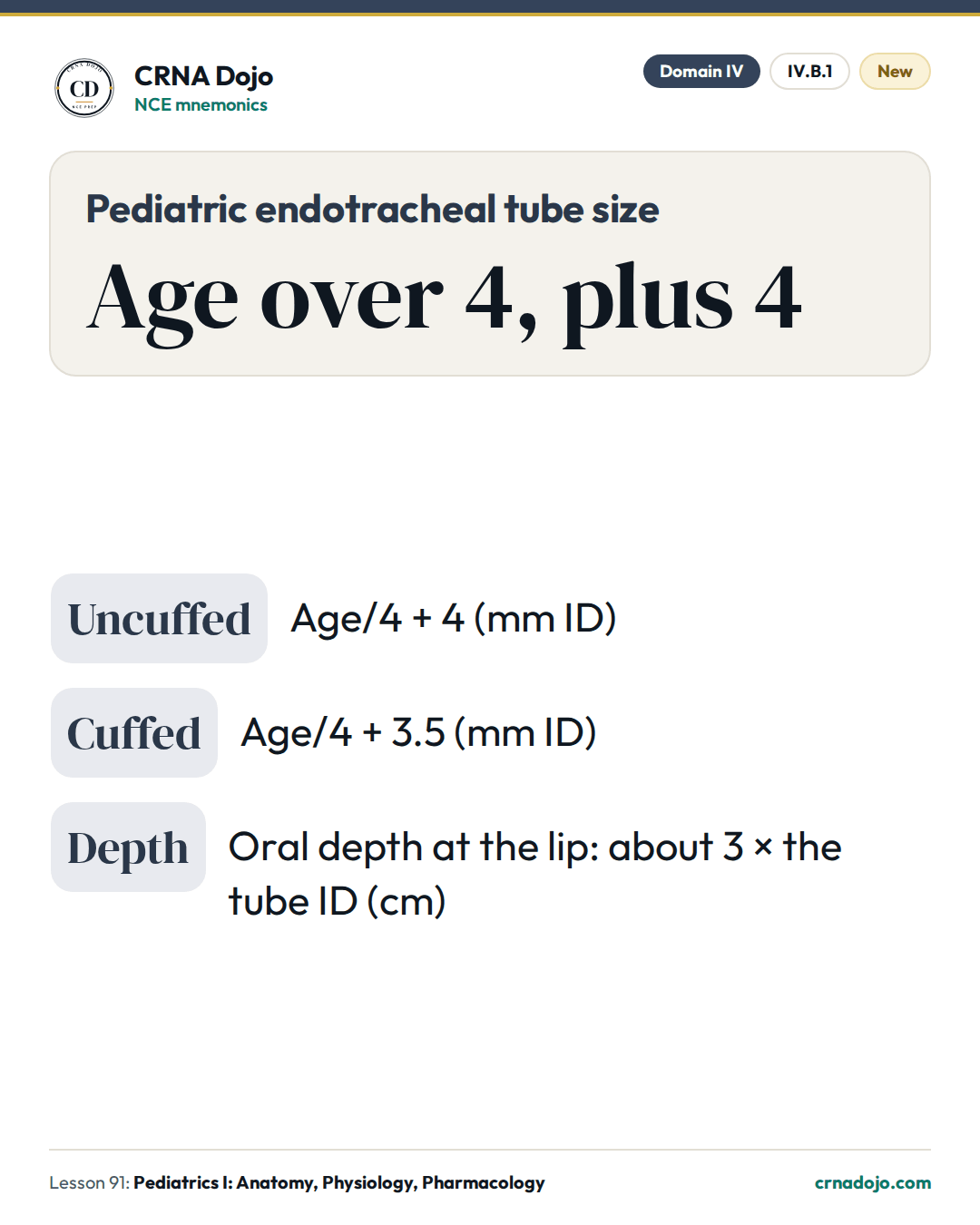
On a phone: press and hold a card, then tap Save to Photos.
Inside this lesson
- Start
- The case
- Infant airway
- Picking the tube
- Why they desaturate
- Apnea risk
- Rate is the output
- Losing heat
- Fluid and sugar
- Why doses differ
- The drugs
- Before the case
- Dose bench
- Lock it in
- Board traps
- Cheat card
- 5-question quiz
- Wrap-up